Passive income for yoga teachers: what's realistic when you're not in the room
· 5 min read
If you teach, you already know the arithmetic. You get paid for being in the room. The week you have flu, or the hall isn’t available, or you take that much promised holiday, the money stops. No sick pay, and if you decide to cancel, class cover is its own headache.
So earning something while you’re not teaching has obvious appeal, and there’s a great deal written about how. Most of it speaks to a bigger market than the UK. Search it and the first page is almost certainly dollars, or perhaps a couple of forum threads and a podcast, or even the articles that start by saying nobody teaches yoga for the money.
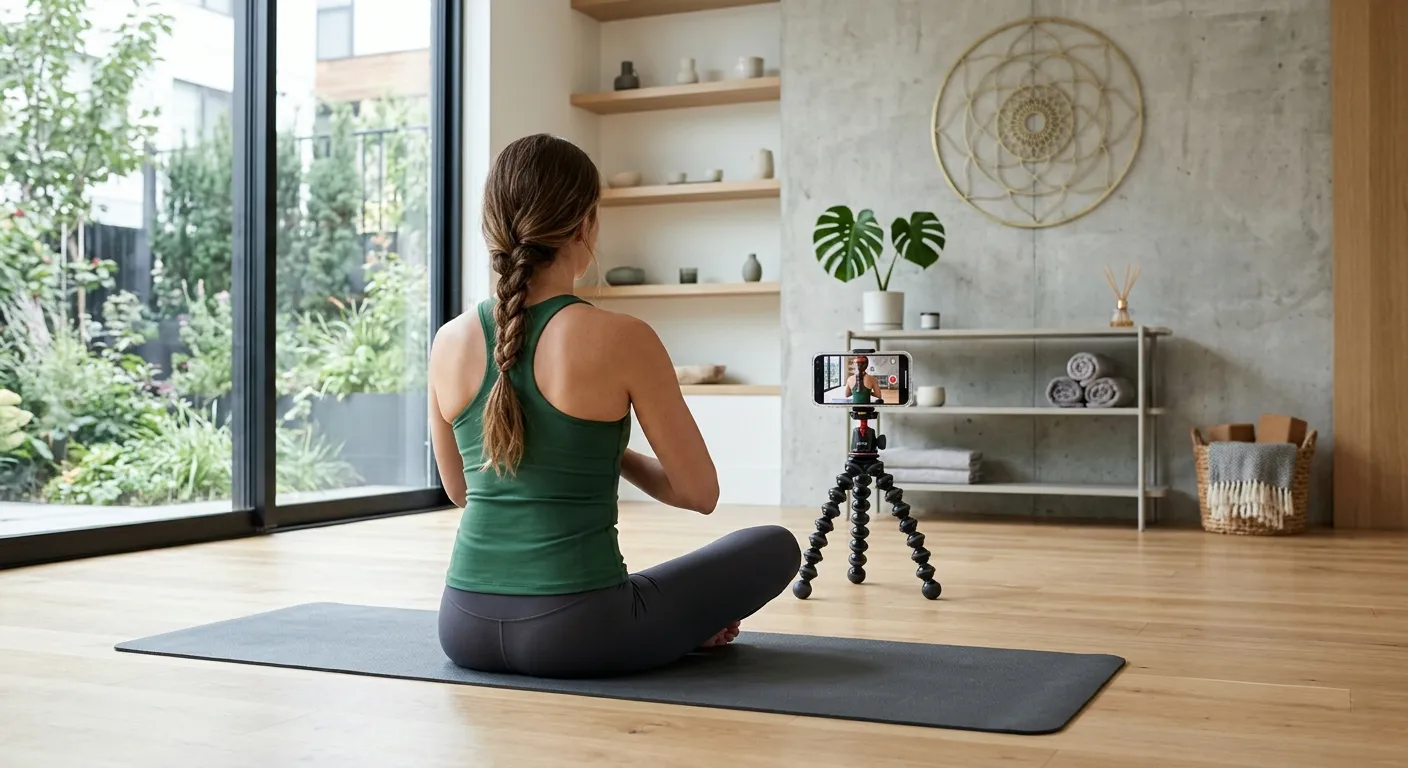
However, that needn’t be the case. A class you’ve already taught can carry on earning. Making that class you teach on a Tuesday evening the source of a recurring income is the goal. This premise is simple - you teach it once, record it, and then sell whilst you sleep or are away on holiday or in bed with a temperature. It isn’t a second business, just your own teaching available at other times, opening up a second revenue stream.
The people who buy it are usually the ones who already come to you. At Yoga at the Mill, our sister company in Chelmsford, we’ve sold a number of courses this way, a mindfulness course among them, and the people buying were our own students. That holds more widely: across the teachers selling recordings and collections on reservie, they’re selling them to the people who already come to them. Not strangers who happened to find them online. That’s good news, because it’s the easiest market there is. You already know these people, and they already know they like your teaching.
Once you see that, it changes what’s worth recording. It isn’t content for an audience. It’s the Susan in your Tuesday class being able to practise on Thursday. It’s John, who moved to Bristol but loved your class and still wants to practise with you. It’s Claire with the toddler who can’t make seven o’clock any more and was about to drift away entirely. A student who’s away for a month doesn’t have to drop out and come back.
A single recording usually sells for less than a live class, because the premium in the room is you looking at them. The difference is that a live class pays once, and a recording keeps selling: to the student who missed it, the one who moved away, the one who wants to practise between classes. Alongside the typical fee that people pay to come to a class, it builds into income that grows with every class you add, without you teaching any more hours.
Single classes sell. A short course sells better and can open up further opportunity, and it’s what’s worked best for us — four sessions on something specific. Think: backs or shoulders or getting down to the floor and up again, a beginner’s start, a short mat Pilates series, recorded while you teach them to a real room and then sold as a set. It’s worth more than four loose classes because it goes somewhere.
A few things will save you time. Published monthly figures are someone else’s result, usually from a mailing list built over years in a much bigger market, so measure yourself against your own students instead. YouTube is good for being found, and if your classes are already up there you can charge for them without moving them. And start with one recording rather than a whole library. The first takes longest while you work out the sound and where to stand the phone. After that they’re quicker, and selling one teaches you more than making six.
It works best on top of a steady base. Shona Garner, a UK yoga teacher and business coach, puts it as getting the regular committed part of your income steady first — terms, monthly plans, blocks — and adding the higher-priced and recorded things on top of that. With that base in place, every recording you add is extra.
How it works
If you already take bookings and payments online, recordings don’t need running separately. A student buys with the same card or the same credits, in the same basket, from the same page as your timetable, and nobody has to set up an account somewhere else.
In reservie they sit in libraries, and a set of them can be bundled and sold as one thing when you want to sell a course rather than single classes. Each video or bundle has its own price and its own access rules, and you can give someone access for a set period rather than selling it outright if that suits you better.
It’s an optional add-on rather than part of the monthly plan. The add-ons page has what it costs and what each video plan allows, including that the video plans start straight away rather than inside the free trial.
A class you taught in October can still be earning in February. Record the next class you’re pleased with and offer it to the people who were in the room. It’s the simplest place to start.