How teaching in a cold hall is a lesson in Aparigraha
· 3 min read
The clocks have gone back and the heating in the hall is on a timer somebody else set.
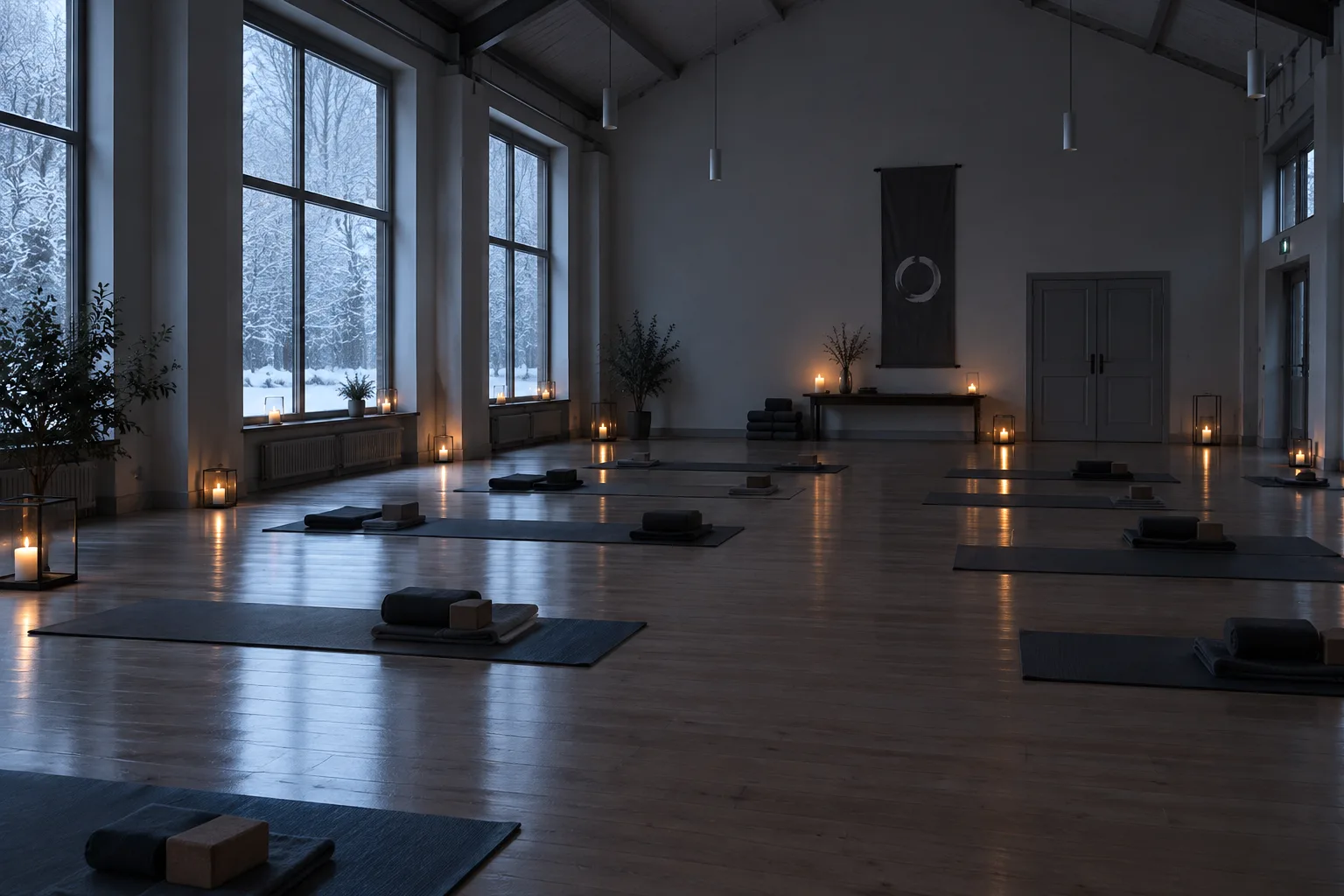
You’ve planned something gentle for this week. It’s the right class for the time of year. Dark by five, everybody knackered, an hour on the floor and home. So you get there early, put the heating on, set the room out, and twenty minutes later it is exactly as cold as it was when you walked in. There’s a heater on the wall making a noise like it’s doing something, but a distinct chill.
Many of us have taught in rooms like this one. Large open spaces, difficult to heat and a little draughty. It doesn’t matter really how many mats you have, how many blankets you have on top of you. It’s cold. Your feet go numb, fingers cold.
Blankets help a bit. A properly cold room is still a properly cold room.
It restricts what you can teach and forces a pivot in our class plan – a lesson in Aparigraha, non-grasping, in action. You cannot really do a restorative or a gentle class. Long holds on a cold floor aren’t restful. People just lie there getting colder, and whether it’s a yoga class or a mat Pilates one, it’s still an hour spent close to the ground.
So you keep everybody moving instead. You’ve got to keep the energy up for people to keep warm. Which is a perfectly good class. It just isn’t the one you wrote in your plan.
And the plan is the bit you have to put down. Not the teaching, not the room, not the temperature – the plan, which you were quite pleased with on Sunday. We wrote about Aparigraha a few years ago in the context of a year of lockdown decisions, and it is the same move in a much smaller room.
Remember: it’s interesting to notice how the Yamas, the first of Patanjali’s eight limbs, play out in our teaching and not only on the mat.